

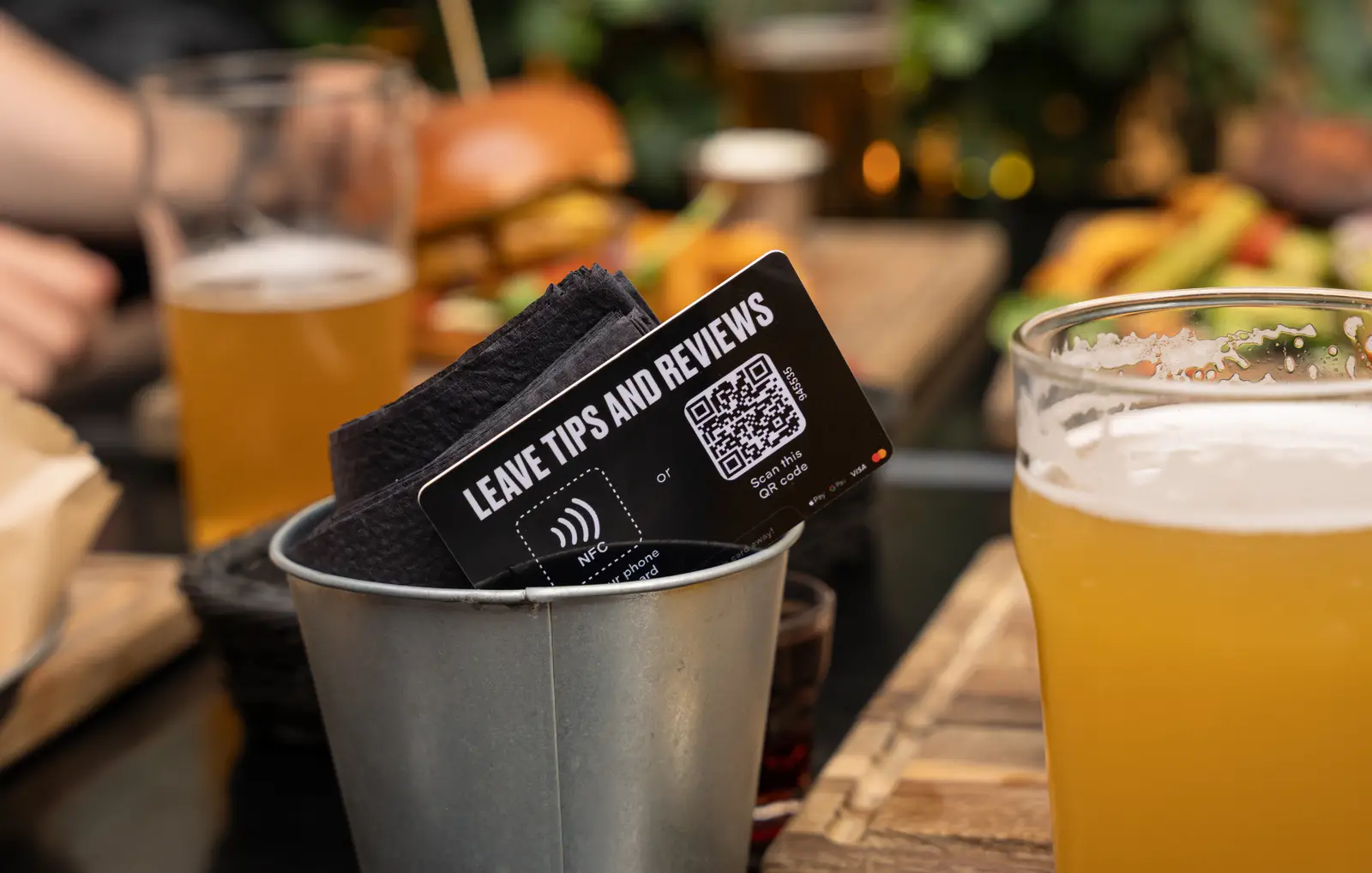
As card and mobile-wallet payments grow, restaurants need a tipping option that does not depend on guests carrying cash. The guest-facing part is simple; the operational part needs more thought.
Restaurants should decide how tips are collected, how they are distributed, what staff can see, how payouts work, and how the setup fits local tax and labour requirements.
The main ways restaurants collect cashless tips
- Tip prompts on payment terminals. The guest adds a tip during a card-present payment.
- QR-based tipping. The guest scans a QR code and tips from their phone, either as a standalone flow or as part of QR payment.
- Link-based tipping. A venue can provide a digital tipping link through a receipt, message or branded material.
Each model can work. The right choice depends on the venue's payment flow and the amount of back-office work it creates.
Terminal tipping: what to check
Terminal tips can be convenient because the tipping step sits inside an existing payment flow. However, accounting and payout treatment varies by country, acquirer and restaurant setup.
Before choosing terminal tipping, confirm:
- how sales and tips are separated in reports
- whether tips can be attributed to individual staff or shifts
- how refunds affect the tip record
- how and when tip funds become available to the venue or staff
- what local tax, payroll or reporting rules apply
Do not assume that terminal tips are always taxed, paid or reported in the same way across Europe. The venue's accountant or local adviser should confirm the treatment for the specific setup.
QR tipping: where it can reduce operational friction
QR-based cashless tipping can work independently from the restaurant bill or be connected to a broader guest journey. It can be useful when the venue wants a digital tipping option without routing every tip through the main card terminal flow.
The practical questions are the same: guest experience, reporting, distribution, payout method and local compliance.
Distribution rules: make them clear before launch
Common models include:
- Individual tips. Tips are associated with a specific staff member or service interaction.
- Group or pooled tips. Tips are collected for a team and split using configured rules.
- Role-based rules. The venue allocates defined shares between eligible roles where local rules allow it.
GlobalTips can support individual or group tip distribution depending on the venue setup, including configured percentage or fixed allocation logic. The rules should be explained clearly to staff before the system goes live.
Payout timing and methods
Payout options are not universal. They depend on the country, payment provider, connected-account structure and product configuration.
The venue should tell staff what payout method is available, how often payouts occur and where they can see relevant transaction or earnings information. Avoid promising instant or same-day access unless the specific market and setup support it.
What it costs to implement cashless tipping
The total cost may include:
- software or platform fees
- payment processing where applicable
- Rental or purchase of a dedicated hardware terminal, if used.
- physical QR materials
- finance and reconciliation time
- compliance or accounting work required by the local setup
The cheapest guest-facing flow is not always the cheapest operationally. Compare the monthly routine as well as the headline fee.
A practical rollout
- Choose the tipping moment. During payment, after payment, or through a standalone QR flow.
- Define the distribution rule. Individual, pooled or role-based, where permitted.
- Confirm payout and reporting. Make sure finance and staff understand the cadence and records.
- Check local requirements. Confirm tax, labour and reporting treatment with an adviser.
- Pilot the guest flow. Test wording, tip presets, custom amount and the no-tip option.
- Train staff. Explain how tips are collected, distributed and viewed.
- Review the data. Track tip capture, guest drop-off, staff questions and finance workload.
Why GlobalTips works for a transparent tipping setup
Bring cashless tipping, staff visibility, and management tools together with GlobalTips. Waiters use the Staff App to track relevant tip information, while managers configure the setup and review reports in the GlobalTips Dashboard.
Make tipping easy for guests and clear for your team. Book a demo to review distribution and payout options available in your market.